Foodie is on Spring Break so “Foodie And Herb Part 2” will post next week (God willing and the creek don’t rise).
In the meantime, eat hardy and healthy.

Foodie is on Spring Break so “Foodie And Herb Part 2” will post next week (God willing and the creek don’t rise).
In the meantime, eat hardy and healthy.
Something great happened the day I decided to be brave and begin experimenting with herbs and spices. I still use recipes, especially for baking. But cooking “by guess and by golly” is generally pretty much how I do it. Now I enjoy cooking much more. I also enjoy the results much more.
I never make my famous spaghetti sauce the same way twice. I may be using the same herbs, but never in the same amounts, and it always turns out tasty. When I don’t have a specific herb or spice, I often find I can substitute.
However, knowing a little about which spices and herbs work well with different foods can help. It can also be a boon to have some spice blends on hand to use so you don’t have to buy those small bottles with cranked up cost.
Add These to This to Get That
To enhance the flavor of beef, use bay leaves, chili powder, cumin, garlic powder, lemon pepper seasoning, rosemary, marjoram, oregano, or thyme.
When cooking with pork, which has a mild flavor, give it some oomph with basil, caraway seed, ground ginger, Italian seasoning, oregano, savory, rosemary, or garlic powder.
Where I live, we eat wild game. Enhance those flavors with marjoram, thyme, bay leaf, garlic powder, or onion powder.
Turkey is traditionally flavored with poultry seasoning or sage, but you can also try oregano, black pepper, herbs de Provence, onion powder, rosemary savory, or basil.
Chicken and Cornish hens come alive with such herbs as dill weed, basil, ginger, oregano, thyme, chives, bay leaf, garlic and onion powders, paprika, rosemary, sage, or tarragon.
Make Your Own Seasoning Blends
If you need a little jump start to try some new herbs, here are a few blends you can mix up to experiment with.
Salad herb blend: 2 tsp. basil leaves; 1 tsp. dill weed; 1 tbsp. marjoram leaves; 1 tbsp. parsley flakes; 1 tbsp. tarragon leaves. If you like to add protein to your salad, match these ingredients to the list of which goes best with each herb.
Meat and vegetable blend: 1 tbsp. basil; 1 tsp. celery seed; 1 tbsp. marjoram; 1 tsp. onion powder; 1 tsp. thyme.
Taco seasoning: 1 ½ tbsp. oregano; 1 ½ tbsp. garlic powder; 1 tbsp. paprika; 2 tbsp. cumin; 1 tbsp. chili powder; ½ tsp. allspice.
Don’t be afraid to experiment and tweak the blends to your own taste. There’s no right or wrong combination. An advantage to using herbs and blends is that you can spice up your food without using salt.
What’s That Flavor?
Herbs have different flavors, naturally. In addition, they fall into categories of mild, medium and robust. Chives and parsley are examples of mild-flavored herbs. Some medium-flavored herbs are basil, dill weed, marjoram, and mint. Stronger-tasting herbs are those like bay leaves, oregano, rosemary, sage, savory, tarragon, and thyme.
Tips for Keeping Herbs and Spices Fresh
Avoid storing spices near the stove, dishwasher, sink or a window. Dried spices don’t spoil, but they can lose strength. Moisture and heat contribute to this. Be sure to never sprinkle or pour spices directly into a steaming pot since the steam introduced into the bottle hastens loss of flavor and aroma. It also results in caking. For the same reason, if you’re measuring from the bottle with a measuring spoon, be sure the spoon is dry.
Some folks like to use fresh herbs for everything and that’s a great idea. You can always substitute dried herbs for fresh if you know how, and vice-versa. Check it out here.
Next week, Foodie meets herb in part 2 to talk about how to enhance other foods (pasta, vegetables and seafood), helpful substitutions, cooking tips, and a recipe or two.
Bon appetite!
It won’t be long and my movie buddy will be gone. She’s moving to sunny Florida and I’ll remain here in the Midwest. I will miss her. She and I have similar tastes in movies and books. We both like to play Scrabble and we both can talk a mile a minute.

Today’s Foodie post is re-blogged for Gina, my movie buddy, and a tribute to that quintessential concession stand treat: popcorn.
“I Can Hear It Now”
Popcorn is a snack food that has been compared to social media. I suppose it’s true; the more generous you are with it, the more people you attract.
When you think of popcorn, do you think of
a) Jiffy Pop
b) Microwaved
c) Theater-popped
d) Air-popped
e) All of the above
When popcorn pops, it creates not just a sound in the ear, but an aroma in the nose. The unique treat in your hand belies the soft crunch you’re about to feel between your teeth (and the nasty hulls stuck there later on). Popcorn is a sensual experience only the eater can describe.
I come from the era of Jiffy Pop, but my family could neither afford it nor would one package have fed our large family. We popped our kernels from a bag the old fashioned way.
f) In a pan on top of the stove
My earliest association of popcorn involves Mom serving up the surprise, usually on a Saturday night. The seven of us–Dad and we six kids–would be sitting in the living room watching TV when, all of a sudden, “It” would begin.
Pop! Pop! Pop! POP-POP-POP! POP-POP-POP-POPPITY-POP! An unmistakable sound, those kernels hitting the lid of a pan. Mom couldn’t hide now what she was up to. And inevitably, one of us would hurry to the kitchen to confirm and report back, “We’re having popcorn!”
By then, the aroma of those tiny popping kernels wafted through the house; we needed no one to tell us. Imagine six kids full of anticipation for a rare treat. Then Mom came first with a bowl for Dad and, in turns, a bowl for each of us children. She’d give the popping another go because one pan didn’t feed everyone.
I confess that I can eat popcorn until it’s coming out of my ears (pun intended). At a movie theater, I’ve actually had friends with whom I’m attending keep tabs on me. Or talk me down from the ledge of even getting in line to purchase a bushel basket of it.
Whew, I just walk in the door and I’m a theater popcorn junkie. How can those youngsters at the concession stand possibly feel good about trafficking refills for a paltry fifty cents? Dripping with butter, for me, it’s a cross between Mom’s love served in a bowl and Paula Dean’s favorite recipe.*
Now, just in time for my blog post–I’ve wanted to write about popcorn for a couple weeks–the New York Times publishes an article about scientists “discovering” the mechanics of popcorn popping. Is this really news? Did no one ever figure this out before?
As if the average kid about to get a bowl of air-popped, Jiffy Popped, microwaved, or theater popcorn cared. **
At heart, I’m a kid when it comes to popcorn. It reminds me of sitting with my sibs and the folks watching the boob tube. That truly felt like family time. I didn’t need bowl after bowl of it to enjoy it. I didn’t need the buttery-flavored junk on top or the special toppings they offer these days. It didn’t have to come quickly like microwaved popcorn.
The sound and the scent were enough. And Mom knowing just when it was a good night to treat us. That’s another sensual experience, I suppose. One that evokes pleasure in my heart.
Somewhere, kids must still be sitting in living rooms listening to the poppity-pop out in the kitchen while Mom prepares to serve up a little fun and love. I know this because I see that popcorn can still be found in kernel form on supermarket shelves; the kind you have to pop without a microwave.
But if you’re interested in microwaving without buying the commercial microwave brands, here’s a great article with tips for just that.
Why not pick up some popcorn–your choice–this weekend and enjoy the treat with your family? Don’t forget the dental floss.
*I realize that’s not real butter, only some buttery-flavored concoction but still…
** Actually, my geeky grandson would probably love to study the principles of corn popping.
There must be as many different ways to make baked beans as there are families who make them. Honestly, I don’t remember how I prepared them prior to finding this recipe. When I served them to my family, even the picky eaters liked them. I like the idea that most of the sweetness comes from raisins and apple. I don’t think I’ve ever seen a no-sugar-added recipe for baked beans before this one.
Crazy Baked Beans
1 medium apple, pared and diced
½ c. chopped onion
1 31-oz. can pork and beans
6 ounces smoky links, thinly sliced
¼ c. raisins
2 T. ketchup
2 t. prepared mustard
¼ t. cinnamon
In a small sauce pan, cook apple and onion in a small amount of boiling water about five minutes or until tender. Drain. In large mixing bowl, stir together apple/onion mixture, beans, smoky links, raisins, ketchup, mustard and cinnamon. Turn mixture into a 1 ½ quart casserole dish or bean pot. Bake uncovered at 375 F. for one hour (or until heated through), stirring once.
These are good served with corn meal muffins.
Makes 8 half-cup servings
As always, if you like to cook with raw foods, you can substitute the pork and beans with dried beans to make the equivalent. In that case, you would want to add some molasses and a little brown or raw sugar. It might not take more than a couple tablespoons of each. Add them to your own taste. Use your imagination for substitutes for the meat.
Flexibility makes for a great cook!
I’m a big fan of ethnic foods. All kinds: Greek, Chinese, Indian, Mexican, Japanese, Italian.
Over the years I’ve attempted recipes for a few of them and I enjoy cooking Mexican style best of all. I have a Hispanic friend who taught me to make refried beans from scratch. My authentic Spanish rice recipe comes from Azteca foods.
Every once in a while I invite friends over for a meal of beans, rice and homemade wet burritos. I even learned to make my own flour tortillas and enchilada sauce. After learning to make wet burritos for a family years ago, I don’t think I’d know how to make them for one.
So I go all “social butterfly” and enjoy the fellowship.
Today’s Foodie offering is a simple dish.
Tex-Mex Black Beans
Makes 4 one-cup servings
16 oz. can black beans, drained and rinsed
15 oz. can corn, drained and rinsed
½ c. chunky salsa (mild, medium or hot; your choice)
Juice of one lime
1-2 tsp. cumin
1 T. olive oil
Salt and pepper to taste
Just toss all the ingredients together and warm thoroughly in the microwave.
Although the dish is meant to be warm, you could make it a salad by adding greens of your choice and tossing together with a little more salsa or some ranch dressing. If you prefer using dry beans, use enough for the equivalent of two cups canned beans. Another healthier choice is using fresh or frozen corn.
Enjoy!
Not too long ago, a friend and I had a conversation about the amount of sugar added to food. This happened right after I’d read an article about the hidden sugars in foods we eat every day. She’d been interested in making changes just like I was.
I’ve wanted to be a food snob; really I have. But I can’t be one. I’ve had a history of eating junk, and sugar was a big culprit in my formerly decadent diet. I still crave it at times.
But there’s something annoying about a former food addict trying to tell people how they should eat. That said, here’s my take on sugar and why I’ll pass on something of interest you may want to take to heart. (Literally)
Besides, it’s my blog and I can.
Facts are facts. Below is some information about recommended sugar intake and a list of 56 ways–count ’em–in which sugar can be listed on an ingredients label.
So how much should your sugar intake be? Several health organizations, including the American Heart Association, suggest that added sugar should be limited to no more than six to seven percent of your total calories. This does not include naturally occurring sugars found in fruits (fructose) and dairy products (lactose). The chart below lists the maximum recommended daily sugar intake based on various calorie levels.
Maximum Sugar Intake
Daily Calorie Intake Grams of Sugar Teaspoons
1,200 21 5
1,500 26 6
1,800 31 7
2,100 36 9
2,400 42 10
2,700 47 12
And here’s that list of the ways sugar shows up on an ingredients label. This list had me flabbergasted.
Look how many say syrup! What do you think of when you hear the word “syrup?” Yep, sticky and sweet. Ethyl maltol sounds like something you’d put in your gas tank.
Agave nectar
Barley malt
Beet sugar
Blackstrap molasses
Brown rice syrup
Brown sugar
Butter sugar
Cane juice crystals
Cane juice
Cane sugar
Coconut sugar
Caster sugar
Carob syrup
Corn sweetener
Corn syrup
Corn syrup solids
Crystalline fructose
Date sugar
Demara sugar
Dextran
Diastatic malt
Diatase
Ethyl maltol
Evaporated cane juice
Fructose
Fruit juice concentrate
Galactose
Glucose
Golden sugar
Golden syrup
High fructose corn syrup
Honey
Invert sugar
Lactose
Malt syrup
Maltodextrin
Maltose
Maple syrup
Molasses syrup
Muscovado sugar
Organic raw sugar
Oat syrup
Panela
Panocha
Confectioner’s sugar
Rice bran syrup
Rice syrup
Sorghum
Sorghum syrup
Sucrose
Sugar
Syrup
Treacle
Tapioca syrup
Turbinado sugar
Yellow sugar
As I said, I’m by no means perfect when it comes to my diet. After all, I’ve posted recipes on this blog for cookies I really like. And I’m not a doctor, a scientist or a dietitian. But I’ve made drastic changes in what and how much I put in my mouth. The reasons are many, but I began looking at food labels a few years ago and decided then some changes had to be made.
For instance, a couple years ago, I did an experiment with eliminating sugar and artificial sweeteners from my diet. After two weeks (I fell off the wagon), I noticed the pain from arthritis in my thumbs was gone. As soon as I started eating sugar again, the pain came back. I’m limiting sugar and artificial sweeteners now and for the last couple months, that pain has disappeared again.
What a relief. I can only imagine the other forms of inflammation in my body that are slowly going away or being reduced as a result of the decision.
Now if I want the flavor of an apple or an orange, I don’t drink it. I eat an apple or an orange. Nothing added and there’s the benefit of getting fiber.
I wish I’d made these changes sooner in life. Some of what I’m learning about food–especially sugar–is just common sense. But in my case, common sense wasn’t so common. I have to say I really didn’t care much either.
Now I do care.
That’s why this Foodie post is about eliminating as much sugar as possible from one’s diet. Even if I don’t personally know you who are reading this, I know you can benefit from the information.
Of course, knowledge is power only if you apply it.
Foodie Friday will still feature the occasional recipe that uses sugar. I am NOT a food snob and I love to cook and bake. But there will probably be more recipes for ‘stuff’ that doesn’t include it.
Good eating to you. And here’s to your health.
Today is National Cookie Day and I’m wondering…why a single day?

This is the time of year when cookie exchanges are popular. I took part in one several years ago and couldn’t believe the variety of cookies people brought. Chocolate cookies, peanut butter cookies, brownies, cookies that looked like trail mix and a dozen others I can’t even begin to name. Even traditional sugar cookies showed off individual character, reflecting the cook’s expertise. I went home with enough cookies to last…uh…a while.
I was going to post a cookie recipe for the holidays anyway, so for all those cookie monster types out there (like me), here’s this week’s foodie recipe and a bonus from a former post.
Coconut Macaroons
1 1/3 c. coconut
1/2 c. chopped almonds
1/3 c. sugar
2 T. flour
1/8 t. salt
2 egg whites, beaten to soft peaks
1/2 t. almond extract
Preheat oven to 325 degrees
Mix together coconut, almonds, sugar, flour and salt. Fold in egg whites and almond extract, mixing well.
Drop from a teaspoon onto lightly greased baking sheets.
Bake 20 minutes or until edges of cookies are golden brown.
Remove from baking sheets immediately and cool on racks.
Makes about 1 ½ dozen
For chocolate lovers, a simple variation would be to dip the bottoms of the cookies in melted chocolate after cooling and let them sit on racks upside down until the chocolate is firm.
A New Way to Eat Chicken Salad
Here’s a new and healthier way to eat chicken salad if you’re trying to keep the “bad” fats out and the “good” fats in. This easy and tasty spread uses avocado instead of mayonnaise or salad dressing.
So for Foodie Friday, try something new on a whole grain bagel or slice of whole grain bread, in a wrap, or on a green salad.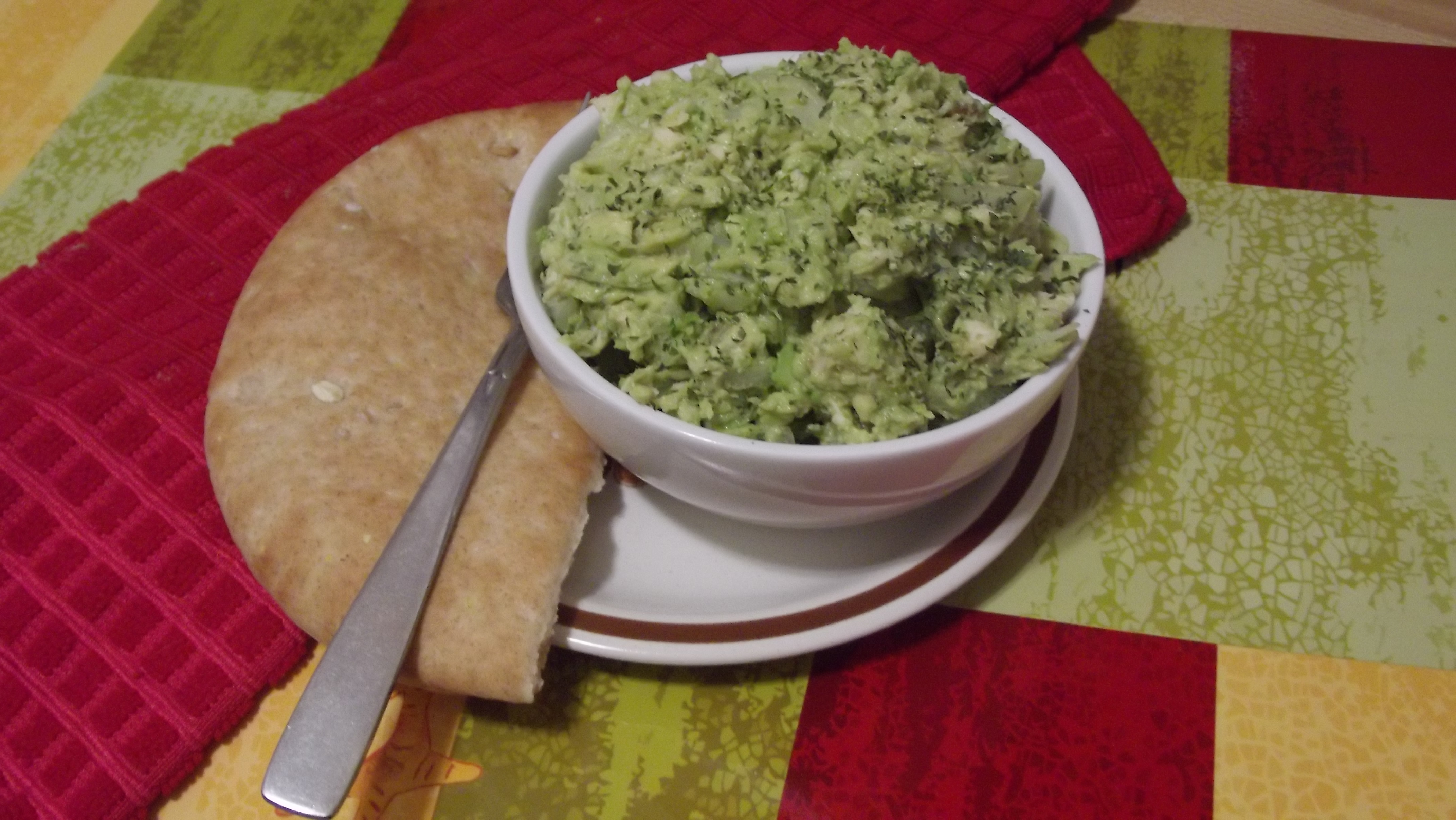
Avocado Chicken Salad
2-3 boneless, skinless chicken breasts, cooked
1 ripe avocado, mashed
1/4 c. finely diced onion
Juice of one lime
1/2 T. cilantro
Salt and pepper to taste
Mix onion, lime juice, cilantro, salt, and pepper into mashed avocado. Shred chicken and blend all ingredients together.
Yields 4 servings
See? I told you it was easy!
Tip: If you aren’t using the chicken salad up in one day, keep the pit from the avocado and place it in the covered dish for storage. It helps to keep the avocado mixture from turning brown.
 The Fruitful Life