God Asks Questions

Occasionally, I ask God a question. It’s not a case of questioning God, which is entirely different. Sometimes I just feel the need to have a conversation in which he makes things clearer. I don’t always understand.

For instance, I sometimes ask, “What’s going on here, Lord?” Hoping he’ll give me insight to a situation or how another person is responding, I check in with him first. Another one I ask is “Will you please direct me here, Lord? I’m not sure which way to go.”

These, obviously, aren’t hard questions for God. He can answer any question. When he wants to. The thing I’ve learned about asking God a question is sometimes he answers in a way I wasn’t expecting. God’s answer to my question might be that I get another situation. When asking for direction, he more often than not leads me to some place I never even considered. Or someplace I thought of but didn’t want to go.man in woods praying

God is in the habit of asking me questions as well. In fact, I get more questions from God than he gets from me.  To inspire me toward further spiritual maturity and to being conformed to the image of his Son, the questions are much harder for me than my questions are for him.

Obviously.

Some time ago, God asked me about my motivations and wanted me to be clear on something. Turnabout is fair play with him, for sure. This is what he asked me:

“What is the difference between your devotion to Jesus and devotion to your idea of what Jesus wants?”

This question is one I return to repeatedly. Because I tend to think I know what God wants, my actions will reflect that. If I don’t stop and consider first my relationship with Jesus and remember what his mission is, I create my own mission.

Heavenly Father, I’m so grateful that you’re always working and that your Son is as well. The questions you ask are sometimes difficult for me because I so often think I know the way you work and how you want to work in the world. Please keep reminding me that you are the one in charge, even when I don’t understand what’s going on. You’re the perfect parent and I trust you to raise me as a good Father would. For your glory, Amen.

“Awesome”

When did it happen? When did the word “awesome” become a throw-away word?

Here’s what I mean by throw-away.

The Merriam-Webster dictionary defines “awe” this way: an emotion variously combining dread, veneration (respect), and wonder that is inspired by authority or by the sacred or sublime. For example, “stood in awe of the king” or “regard nature’s wonders with awe.”

But now, it’s an everyday occurrence for people to refer to the most common things as “awesome.”

That t-shirt with the clever saying on it. “Oh, man, that’s awesome.” A program on TV, the actor in that TV show, a video someone shared on Facebook or YouTube, or hey, just about anything can be “awesome.”

But are they really?

Do these things invoke the kind of inspiration felt when we’re in the presence of something or Someone deserving of the definition? God, His creation and any of His works are truly awesome. There are few things that compare.

A.W. Tozer, a theologian and author of many books about worship, living in the presence of God and knowing Him personally, says this:

“What comes into our minds when we think of God is the most important thing about us.”

What comes to your mind?

If our God is all-knowing, ever-present, sovereign, mighty, and constantly and impartially loving, the truest form of “awesomeness” is Him.

Hubble telescope view of the Horsehead Nebula

Hubble telescope view of the Horsehead Nebula

Whenever I go stargazing, I’m in awe. When I think of how a baby grows and is born into the world, I’m in awe. Seeing God work through people who are broken and imperfect puts me in awe. God’s revealed message to us through His Word is awesome. Christ’s sacrifice on the cross of Calvary brings me to a state of humility and awe.

I stand in awe of the King.

The other day I was listening to a song by one of my favorite Christian singer/songwriters, Rich Mullens. In “Awesome God,” he writes

“Our God is an awesome God. He reigns from heaven above with wisdom, power and love. Our God is an awesome God.”

That chorus is repeated over and over, a technique in songwriting I’m usually not fond of. But in this case, I don’t mind singing like that. Matter of fact, I was singing at the top of my lungs how awesome God is.

In my van. In front of God and everybody.

Because God and His creation are the truest form of the word “awesome

Digging Into The Bible

Over the years I’ve sat in many small groups of people studying the Bible in some fashion. Every group included at least one person who was unfamiliar with scripture and had no regular Bible reading plan.

I’ve always been passionate about helping people read and understand the Bible better. The reason for my passion is because I know if they keep reading, they’ll get to know God better. They’ll get to know Jesus, his Son. Over time, they’ll even begin to appreciate the Holy Spirit’s role in their lives.

We all enjoy forming relationships in a small group and that’s important. But I believe the small group experience will be enriched when people also form a growing relationship with God. To someone new to it all, even talking about a relationship with God can be confusing.

I understand that because I had questions too. I was too proud to ask them so for a long time I stayed ignorant about a lot of things God wanted me to know and do. Pretty much like I did everything, I relied on myself. I thank God for some good people who gently taught me that I didn’t know it all.  Often, I didn’t even know what I thought I knew.

If you know what I mean.

Today, I love to hear people speak up and ask questions referring to things they don’t understand about God or the Bible. It inspires me, knowing that they want the enlightenment scripture can bring. More than just trying to answer questions, however, I like to point them to Christ by encouraging them to dig into the Bible themselves.

In these cases “Where do I start?” is a common question.

Not a list of Ten Ways to Get to Know Your Bibleman-reading-bible

Rather than being clever and offering a quick fix and a list, here’s a Bible reading plan that doesn’t take much time. It’s pretty comprehensive, covering some significant stories and points in scripture. Even better, it just may give a person with lots of questions enough of a taste to want more. The result of completing the forty days might be that an individual–maybe you–begins a daily Bible reading routine.

Seasoned readers of the Bible might also give the forty-day plan a try. If how you’re doing it now has become a little stale (and it can; don’t feel guilty about that), go ahead and stop how you’re doing it. Reading passages which are seemingly unrelated might put some kick in your relationship with Christ as well. You can always return to the method you were previously engaged in.

God comes near when we draw near to him. Reading the Bible, meditating on what we read and praying for understanding open us up to hear his voice. And that’s something all of us often ask about.

“How do I hear God speak to me personally?”

A Suggested Forty-Day Bible Reading Plan

Day 1: Genesis chapters 1-2 (The Creation Account)
Day 2: Genesis chapter 3 (The Beginning of Sin)
Day 3: Genesis chapters 15, 17:15-27 (God’s covenant with Abraham)
Day 4: Genesis chapter 21:1-7; chapter 22 (God’s faithfulness and Abrahams faith)
Day 5: Exodus chapters 3-4 (God Calls Moses to deliver His people)
Day 6: Exodus 6 (The Ten Commandments)
Day 7 Joshua 1 (Conquering the Promised Land)
Day 8 1 Samuel 16-17 (David and Goliath)
Day 9: 1 Kings chapters 3; 8:1-9; 9 (King Solomon’s wisdom and the Temple)
Day 10 1 Kings 18 (The prophet Elijah and the prophets of Baal)
Day 11: 2 Kings 25 (The Siege of Jerusalem and the Exile of Judah)
Day 12: Daniel 2-3 (Daniel in Babylon: The fiery furnace)
Day 13: Ezra 3 (Rebuilding the temple)
Day 14: Isaiah chapters 9, 53, 61 (Isaiah’s prophecy of the coming Messiah)
Day 15: Luke chapters 1-2 (The birth of Jesus)
Day 16: John 1:1-18 (Who Jesus Is)
Day 17: Luke 4:14-44 (Jesus begins his ministry)
Day 18: Matthew 5-6 (The core of Jesus’ teaching)
day 19: John 3 (God’s Love for the world)
Day 20: John 5 (Jesus’ Miracles and Authority)
Day 21: John 11 (Jesus’ Power Over Death)
Day 22: John 15 (The Christian Life Defined)
Day 23: John 17 (Jesus’ High Priestly prayer)
Day 24: Matthew 26-27 (The arrest and crucifixion of Jesus)
Day 25: John 20 (The resurrection of Jesus)
Day 26: Luke 24 (The ascension of Jesus )
Day 27: Acts 2 (The coming of The Holy Spirit)
Day 28 Acts 9 (The conversion of Saul)
Day 29 Acts 16 (The Gospel spreads to Europe)
Day 30 Acts 26 (Paul’s defense of the Christian Faith)
Day 31: Romans 3 (Justification by faith alone)
Day 32: Romans 7-8 (The battle with sin; Life in the Spirit)
Day 33: 1 Corinthians 13 (The way of Love)
Day 34: 1 Corinthians 15 (The power of the resurrection)
Day 35: Galatians 5 (Freedom in Christ)
Day 36: Ephesians 6 (The whole armor of God)
Day 37: Philippians 1:18-2:18 (Christ’s example for us)
Day 38: Colossians 3:1-17 (Putting on the new self)
Day 39: James 1 (Pure religion)
Day 40: Revelation 21-22 (The New Heaven and the New Earth)

Bible reading plan copyright 2005, Crossway; Value Compact Edition, English Standard Version (ESV)

Questions For God

When I was a teenager, I began to have some doubts about my faith. Whenever I would say something even closely resembling such a thing, my mother would say, “Don’t question God, Paula.”

Now that my doubts have been cleared up, I have great faith in God and trust him with everything. However, that journey to complete trust wasn’t down an easy road. Most of the time I discovered his faithfulness through difficult times.

Something else I discovered through becoming familiar with scripture is that there is a difference between questioning God and asking him questions. Questioning him, in my opinion, displays an attitude based on a lack of trust. Asking questions is based on an honest search for God’s heart.

I look at people in the Bible as examples. King David asked questions in many of his psalms. The story of Job, a man God described as “blameless and upright” is full of questions he would like to ask God. The prophets, especially Jeremiah, had questions for God. Jeremiah wrote a whole “letter” to God full of lamentations. Mary asked Gabriel how God would accomplish the virgin birth.

Jesus wasn’t questioning his Father when he prayed in the Garden of Gethsemane to have the cup removed. He was lamenting what he would face in the crucifixion.

Often, it’s in this state of lament that we find ourselves asking hard questions of our Maker.Q A for blog

Examining these instances of lament–whoever it is in scripture–the people involved do the same thing. They often describe the situation to God. They ask their questions. Then they turn from the questions to praising God for what he’s done in the past. They tell him how much they trust him.

Looking back, I believe my doubts were simply a case of wanting some questions answered. I was an immature Christian and needed to have those answers.

Doubt isn’t inherently a bad thing. If our doubts lead us to ask questions and those questions lead us to sound belief, they can create a closer relationship with the Lord.

Doubt accompanied by the questioning attitude, however, can lead to a hard heart. That inevitably causes distance from God.

When we come to God with questions we may not always get an answer. Or the answer we hope for. But we’ll be drawing closer to him, remembering our dependence on him and remaining teachable by his Spirit.

Dear heavenly Father, help me to remember that there are people who, whether Christians or not, have sincere questions they need answered. Remind me that I still come to you with my own. Give me the ability to extend grace and not judge someone’s lack of faith because they have questions. I pray that all who seek you with all of our hearts–even through our questions–will find you as you have promised we will.

Jonah and a Big-Mouthed Fish

While waiting for my appointment with a doctor, I picked up a Highlights magazine from the table beside me. I don’t often read magazines for children, but this one caught my eye because of a cover blurb.

“Whoa! Whale Sharks,” it said.

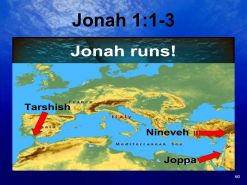
The article in the February 2015 issue was fascinating. As I read it, I began to wonder if perhaps this huge fish wasn’t of the species God chose to swallow Jonah. When I was growing up, our Sunday school teachers gave us flannel graph lessons and explained this reluctant prophet’s story as “Jonah and the Whale.” But ‘whale’ isn’t the animal name given in the Bible. (Jonah 1:17, emphasis mine)

The King James Version says, “Now the Lord had prepared a great fish to swallow up Jonah.”

The New International Version reads: “Now the Lord provided a huge fish to swallow Jonah.”

Yet another version, the New Revised Standard Version, says “But the Lord provided a large fish to swallow up Jonah.”

Even more interesting language comes in the English Standard Version: “And the Lord appointed a great fish to swallow up Jonah.”

I guess, even aside from the verb used to say how the fish came into the story, it’s obvious that this is not a whale, but a fish. Scripture also makes it clear that God caused this to happen.

The basic information about whale sharks is agreed upon from research which scientists have done on them. For perspective, a whale shark is about the size of a school bus so it could easily hold a man in its belly.

Most of us were captivated by the story of Jonah when we were children. It’s even captivating when we’re adults with the very idea that someone survived inside a fish for three days and three nights.

Some people don’t believe the story is true. But God never answers all the questions we have about what happens in the Bible. Scripture includes lots of mysteries.

Perhaps the mystery of what kind of great/huge/large fish swallowed Jonah will never be known. But I think it’s nice to have whale sharks as a possible answer to where Jonah spent three days in the dark as he came to his senses and decided to obey the Lord.

A Foolproof GPS

I pulled into the bank drive-through behind a car bearing a license plate reading WEARAMI.

Giving the motorist the benefit of the doubt on how to spell ‘where,’ I credited her with creatively conveying a message of confusion within a seven-letter limit.

Waiting behind her, I applied the question to my life in general and to my position as a Christ follower in particular. Here’s a list of proofs from scripture that show me where I am insofar as God is concerned. I am:

Close to his heart (Isaiah 40:11)
United with Christ (1 Corinthians 6:17)
Connected to him by his love (Romans 8: 38, 39)
Seated with him in the heavenly realms (Ephesians 2:6)
Following close on his heels (John 10:27)
Upheld by his righteous right hand (Isaiah 41:10)Sony gps

Perhaps if that woman had a global positioning system (GPS) in her car, she wouldn’t doubt her whereabouts. But even then, a GPS is a computer. Computers are only as intelligent as they’ve been programmed to be. For instance, a GPS doesn’t ‘know’ that the route for which it gave instructions has a detour now because of a barricade at an accident site.

While traveling with friends who relied on their GPS, it happened that every time we returned to the hotel, the GPS’s final direction led us into a hedge.

A GPS is not foolproof.

But God’s Positioning System is foolproof. When he says, “I will never leave you,” we can trust him.
Even better than knowing where we stand, is knowing God always has his eye on us.

“For the eyes of the Lord range throughout the earth to strengthen those whose hearts are fully committed to him” (2 Chronicles 16:9).

And if his eye is on the sparrows, I know he watches me.

Read Big Chunks of Scripture? Easy.

For many, even people who’ve been following Christ for a long time, reading lengthy parts of scripture seems daunting. Let alone making an attempt to read the Bible through in a year. This time of year, people who enjoy adding this disciple to their daily routine are planning their strategy.

Perhaps they’ll select a new translation. Or a new study Bible to get some different perspectives. They may choose to read the Bible story chronologically or use a pre-printed plan taking them through Old Testament, New Testament, Psalms and Proverbs readings each day. The ways people read the Bible systematically are as numerous as the people who do it.

For those others who are either new to the Bible and need the milk or need a little guidance to get started, here is a sample 40-day reading plan someone passed on to me. Even this offering can be revised to a person’s schedule. It could end up being a reading a week plan, reading each one until finished. By that time, you’ve read some excellent Bible stories, some solid theology, and know the basics of the Gospel message.

I’m convinced there is no substitute for daily reading of the Bible for spiritual growth. Reading God’s word is how we get to know him and know the things he expects of us as his children. We can also supplement our growth with the writings of trusted authors. (And that topic would make a good blog post in itself).

I hope if you’ve decided this year to dig in and do more reading and studying of God’s word, this list will help you. I also hope that if this list helped you get a good start, that you now have a hunger for more meat.

God bless you and may the Spirit guide your efforts.

Forty-Day Bible reading plan

Day 1: Genesis chapters 1-2 (The Creation Account)
Day 2: Genesis chapter 3 (the Beginning of Sin)
Day 3: Genesis chapters 15, 17:15-27 (God’s covenant with Abraham)
Day 4: Genesis chapter 21:1-7; chapter 22 (God’s faithfulness and Abrahams faith)
Day 5: Exodus chapters 3-4 (God Calls Moses to deliver His people)
Day 6: Exodus 6 (the Ten Commandments)
Day 7: Joshua 1 (conquering the Promised Land)
Day 8: 1 Samuel 16-17 (David and Goliath)
Day 9: 1 Kings chapters 3; 8:1-9; 9 (King Solomon’s wisdom and the Temple)
Day 10: 1 Kings 18 (The prophet Elijah and the prophets of Baal)
Day 11: 2 Kings 25the Siege of Jerusalem and the Exile of Judah)
Day 12: Daniel 2-3 (Daniel in Babylon: The fiery furnace)
Day 13: Ezra 3 (Rebuilding the temple)
Day 14: Isaiah chapters 9, 53, 61 (Isaiah’s prophecy of the coming Messiah)
Day 15: Luke chapters 1-2 (The birth of Jesus)
Day 16: John 1:1-18 (who Jesus Is)
Day 17: Luke 4:14-44 (Jesus begins his ministry)
Day 18: Matthew 5-6 (the core of Jesus’ teaching)
day 19: John 3 (God’s Love for the world)
Day 20: John 5 (Jesus’ Miracles and Authority)
Day 21: John 11 (Jesus’ Power Over Death)
Day 22: John 15 (the Christian Life Defined)
Day 23: John 17 (Jesus’ High Priestly prayer)
Day 24: Matthew 26-27 (the arrest and crucifixion of Jesus)
Day 25: John 20 (The resurrection of Jesus)
Day 26: Luke 24 (the ascension of Jesus )
Day 27: Acts 2 (the coming of The Holy Spirit)
Day 28: Acts 9 (the conversion of Saul)
Day 29: Acts 16 (The Gospel spreads to Europe)
Day 30: Acts 26 Paul’s defense of the Christian Faith)
Day 31: Romans 3 (Justification by faith alone)
Day 32: Romans 7-8 (the battle with sin; Life in the Spirit)
Day 33: 1 Corinthians 13 (The way of Love)
Day 34: 1 Corinthians 15 (the power of the resurrection)
Day 35: Galatians 5 (Freedom in Christ)
Day 36: Ephesians 6 (The whole armor of God)
Day 37: Philippians 1:18-2:18 (Christ’s example for us)
Day 38: Colossians 3:1-17 (Putting on the new self)
Day 39: James 1 (Pure religion)
Day 40: Revelation 21-22 (The New Heaven and the New Earth)

Facing Adversity

The journey of spiritual maturity isn’t always easy. From the first tentative steps we take as Christ followers, we experience hard times. Adversity comes to everyone, not just those who live in obedience to the sinful nature.

Yet with our eyes focused on Jesus, adversity doesn’t have the power over us it once had. If we’re living in his presence and listening for his voice, we understand more about who Christ is and we grow deeper in our relationship with him.

As we stay in step with the Holy Spirit, we experience less of the troubles we once made for ourselves. However, when those inevitable times of adversity come, we’re promised that they’re only for a specified time, which God has already ordained.

We also know that God is present in any circumstance, good or bad, and provides the resources we need to get through. The resource may come in the form of another person’s assistance, finances, a specific need for our health, or the prayers of the saints.

When hard times come and put us to the test, God always does his part; what is expected of us? In my experience, relying on God and deepening my conscious contact with him brings peace. Rather than running full-tilt to try and solve a problem, he’s shown me it’s better if I slow down. That doesn’t mean doing nothing. It means I slow down enough to hear what he has to say to me.

“I tell the Lord my troubles and difficulties, and wait for Him to give me
the answers to them,” said one man of God. “And it is wonderful how a
matter that looked very dark will in prayer become clear as crystal by the
help of God’s Spirit.” I think Christians fail so often to get answers to their
prayers because they do not wait long enough on God. They just drop down
and say a few words, and then jump up and forget it and expect God to answer them.
Such praying always reminds me of the small boy ringing his neighbor’s doorbell,
and then running away as fast as he can go. ~ E.M. Bounds

Scripture says we can rely on the power of God to help us through times of adversity. “We are struck down, but not destroyed.”

Jesus warned that in this world we would have trouble, then assured his disciples that he himself had overcome the world (John 16:33).

Following the Master means denying ourselves, which is to die to our rights; carrying our cross, which is to die to our old nature; and to follow, which is obedience.

What does that mean for us? Trials are bound to come in life even with our new life in Christ. But with the power of God working through us, we can overcome any situation and live the abundant life promised to us.

Without God, we’re helpless; but with him all things are possible

Finding God in the Picture

While visiting my hometown several years ago my sisters and I decided to take a walk through downtown. An acquaintance who was also out walking met up with us at a corner of town. She asked if I’d be attending the funeral of a high school friend. I was shocked. I told her I had no idea my friend had passed.

The next day, as I walked away from my seat at the graveside, my friend’s sister rushed up to me and hugged me tightly. “I knew you’d be here,” she said. Strange; I hadn’t planned on attending a funeral when I left home to go visiting. But apparently God was working in the background and had planned it for me.

I’ve come to believe God has a way of finding us and taking us where we belong.

Several times in my journey with God, he reminds me how important it is to acknowledge him in the circumstances of my life. For me, it’s been a process of knowing his ways (as well as a small person can know the ways of a sovereign God) and recognizing his voice when he’s speaking.

Back when God orchestrated the events that took me to my friend’s funeral, I just shook it off; I didn’t think twice about how it happened. Now, I see a little more clearly how he works. It’s no coincidence that I happened to be out walking and saw that particular person. It was no coincidence that she was the older sister of my best friend from high school who had passed away a couple years earlier.

Sandy, my best friend, and this woman who was also now gone from our lives, had been part of a foursome of teens that was almost inseparable. As much as my friend’s sister needed me to be there for her, I needed to be present for my own sake.

God in his sovereignty cares for and works out all aspects of my life even if I don’t see that work immediately. He may be working in the background and through unlikely people.

Events happen in my life that tempt me to question God. But I know better than to do that. Even during those times, because I’m his child, I’ve learned from experience he is always as close to me as he’ll ever be.

I’m reminded of the book of Esther. God’s name is never mentioned, but his presence is certainly there in the citadel of Susa. If we know what to look for and if we’re really looking, we can’t miss him. He’s guiding, providing for and protecting his beloved people. The young Jewish woman who was born Hadassah, became queen and influenced the king in a way perhaps no one else could.

One might say the book of Esther is a story of God finding a young Jewish maiden and taking her where she belonged.